Folding container house
In today’s fast-paced world, where flexibility and cost efficiency are key priorities for modern businesses, the concept of using a folding container house as an office space has gained remarkable attention. Entrepreneurs, start-ups, and even large corporations are exploring new ways to create dynamic workplaces that are adaptable, eco-friendly, and easy to relocate. A folding container house offers precisely that—a smart and sustainable solution that can be customized to suit various office needs without compromising on comfort, functionality, or aesthetics.
The growing popularity of a folding container house stems from its ability to combine durability with design versatility. Unlike traditional buildings, which require months of construction and significant expenses, a folding container house can be assembled within hours and reconfigured as needed. When designed for office use, this type of structure can include all the essentials of a professional workspace, from meeting areas and private cabins to open-plan workstations and break zones. The adaptability of the folding container house makes it an ideal option for businesses that value mobility, innovation, and modern architectural aesthetics.
Customization is one of the most appealing aspects when transforming a folding container house into a functional office. Companies can choose the layout, color scheme, insulation type, window placement, and even advanced smart office features. Modern engineering has made it possible to integrate high-quality insulation materials, soundproofing panels, and energy-efficient systems, ensuring that employees enjoy a comfortable working environment regardless of weather conditions. Lighting and ventilation can also be tailored to enhance productivity, while sustainable energy solutions such as solar panels can be installed to reduce operational costs.
Moreover, a folding container house allows businesses to express their brand identity through design. Whether a company wants a minimalist look with neutral tones or a vibrant workspace with creative decor, customization options are nearly limitless. Glass panels can be added to bring in natural light, while modular furniture can be incorporated to maximize space efficiency. The result is an office that not only looks impressive but also functions seamlessly. The adaptability of a folding container house also allows for easy expansion; additional units can be attached or rearranged as the business grows, eliminating the need for expensive relocation or reconstruction.
One of the biggest advantages of using a folding container house for office use is its mobility. For industries that operate in multiple locations—such as construction, logistics, or event management—having a portable office can be a game changer. A folding container house can be folded, transported to a new site, and reassembled quickly, reducing downtime and costs associated with traditional relocations. This makes it an ideal solution for companies that require temporary or semi-permanent office spaces without the hassle of long-term leases or permanent construction.
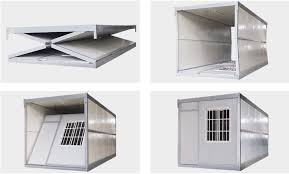
Can a folding container house be customized for office use?
From an environmental perspective, a folding container house is also a sustainable choice. Since these structures often utilize recycled steel containers and eco-friendly materials, their carbon footprint is significantly lower compared to brick-and-mortar buildings. When customized for office use, eco-conscious businesses can integrate green technologies such as rainwater harvesting systems, energy-efficient HVAC units, and LED lighting. These features not only contribute to environmental conservation but also appeal to clients and employees who value sustainability.
The cost-effectiveness of a folding container house further strengthens its appeal as a modern office alternative. Traditional office construction involves high labor costs, lengthy approval processes, and potential delays due to weather or supply chain issues. In contrast, a folding container house is pre-fabricated, meaning most of the work is done in a factory setting, resulting in faster delivery times and predictable costs. This allows business owners to focus their financial resources on technology, staff, and growth rather than construction overheads. Additionally, maintenance expenses for these structures are relatively low, thanks to the durable materials used in their production.
Comfort and safety are also top considerations when customizing a folding container house for office use. Modern designs include features such as fire-resistant panels, reinforced steel framing, and advanced locking systems to ensure security and compliance with building standards. Interior comfort can be enhanced through climate control systems, ergonomic furnishings, and acoustic treatments that create a quiet and focused work environment. With proper design and planning, a folding container house can provide the same, if not better, level of comfort as traditional office spaces.
Another important aspect to note is that customization does not stop at interior design. Exterior modifications, such as branding panels, outdoor seating areas, or landscaped surroundings, can be incorporated to create a professional and inviting business environment. The flexibility of a folding container house allows companies to blend functionality with visual appeal, making a lasting impression on clients and visitors. Furthermore, its modular design enables relocation or redesign without extensive demolition, which saves time and resources in the long run.
In essence, the question of whether a folding container house can be customized for office use has a resounding answer—absolutely. These innovative structures offer unmatched versatility, cost efficiency, and environmental benefits, making them a viable choice for the future of workspace design. Businesses seeking adaptable, stylish, and sustainable office solutions are increasingly turning toward this trend as it perfectly aligns with modern business values. A folding container house not only redefines what an office can look like but also represents the next step in creating workspaces that evolve alongside the companies they serve.
